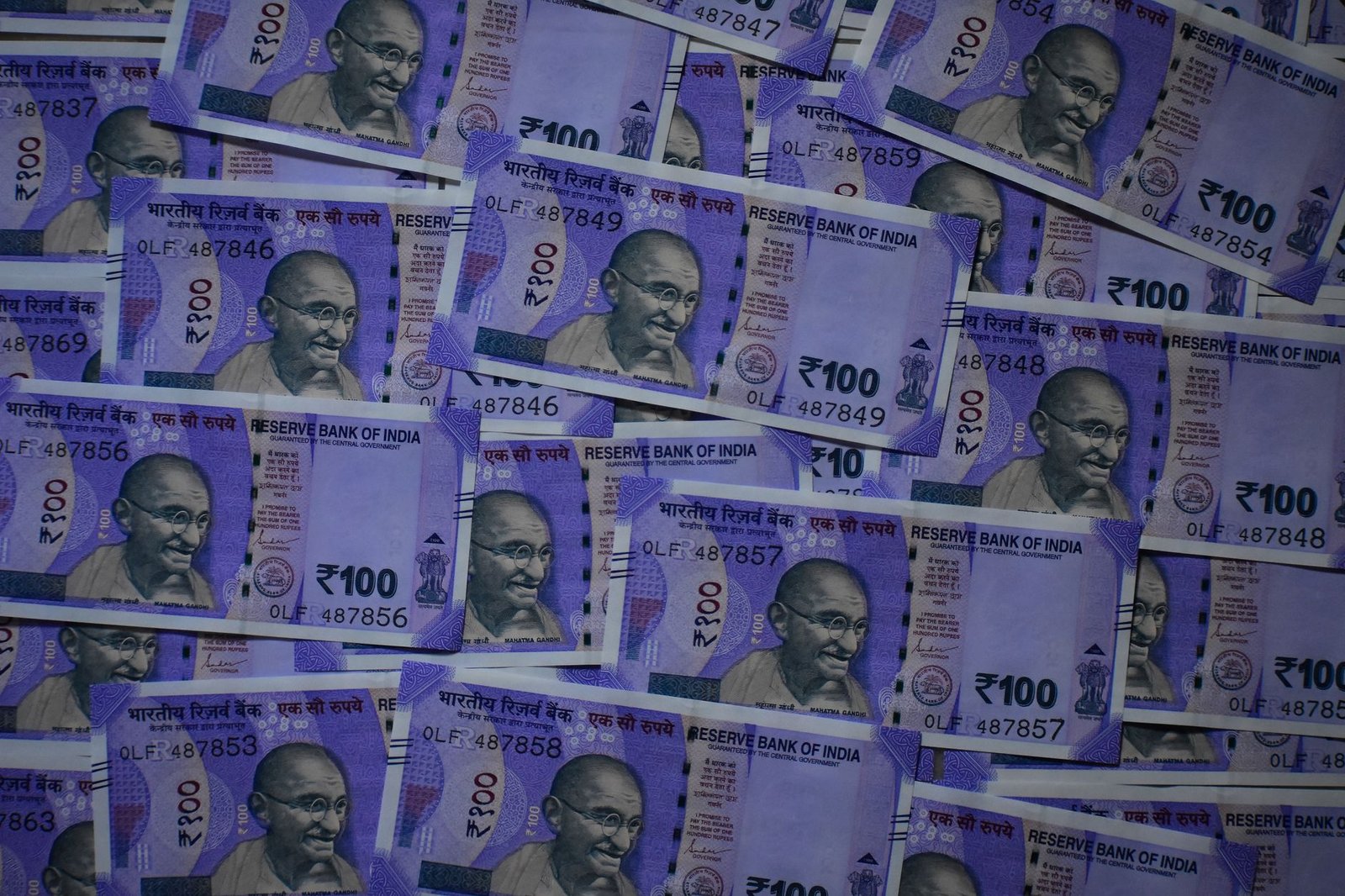
A former senior official at India’s central bank has cautioned that leaning too heavily on the rupee’s exchange rate to absorb economic stress can end up harming India’s broader economy rather than protecting it.
India’s currency management has come under fresh scrutiny after a former Reserve Bank of India official argued that allowing the rupee to act as a primary shock absorber carries meaningful risks for the real economy — the part of the economy concerned with actual output, jobs, and household incomes, as distinct from financial markets.
The warning touches on a long-running debate in emerging-market policy circles. When an economy faces external pressure — such as rising global interest rates, a stronger U.S. dollar, or a slowdown in export demand — policymakers have broadly two tools: let the currency weaken to adjust, or intervene to hold it steady. Both approaches involve trade-offs.
Allowing a currency to slide can make imports more expensive, fueling inflation and squeezing consumers and businesses that rely on foreign goods or inputs. For a country like India, where energy and commodities form a large share of imports, a weaker rupee can quickly translate into higher prices at home. That inflationary pressure can, in turn, force the central bank to raise interest rates, slowing growth and employment.
On the other hand, defending the currency too aggressively drains the central bank’s foreign-exchange reserves and can leave the economy less flexible when a bigger shock eventually arrives. The former official’s remarks appear to caution against an over-reliance on either extreme, particularly on using currency depreciation as a policy tool without considering its downstream effects.
The rupee has faced periodic bouts of pressure in recent years alongside broader emerging-market volatility driven by U.S. Federal Reserve rate moves and global risk appetite. The Reserve Bank of India has at various points intervened in currency markets to limit sharp swings, a strategy that has helped keep inflation from spiking but has also drawn debate about whether it leaves the exchange rate misaligned with economic fundamentals.
The comments add to a broader global conversation about how developing economies should manage their currencies at a time when the dollar remains strong and cross-border capital flows are unpredictable. For Indian policymakers, the challenge is to balance exchange-rate stability with the flexibility needed to keep growth on track.
Markets and analysts will be watching how the Reserve Bank of India calibrates its currency interventions as global monetary conditions continue to shift.