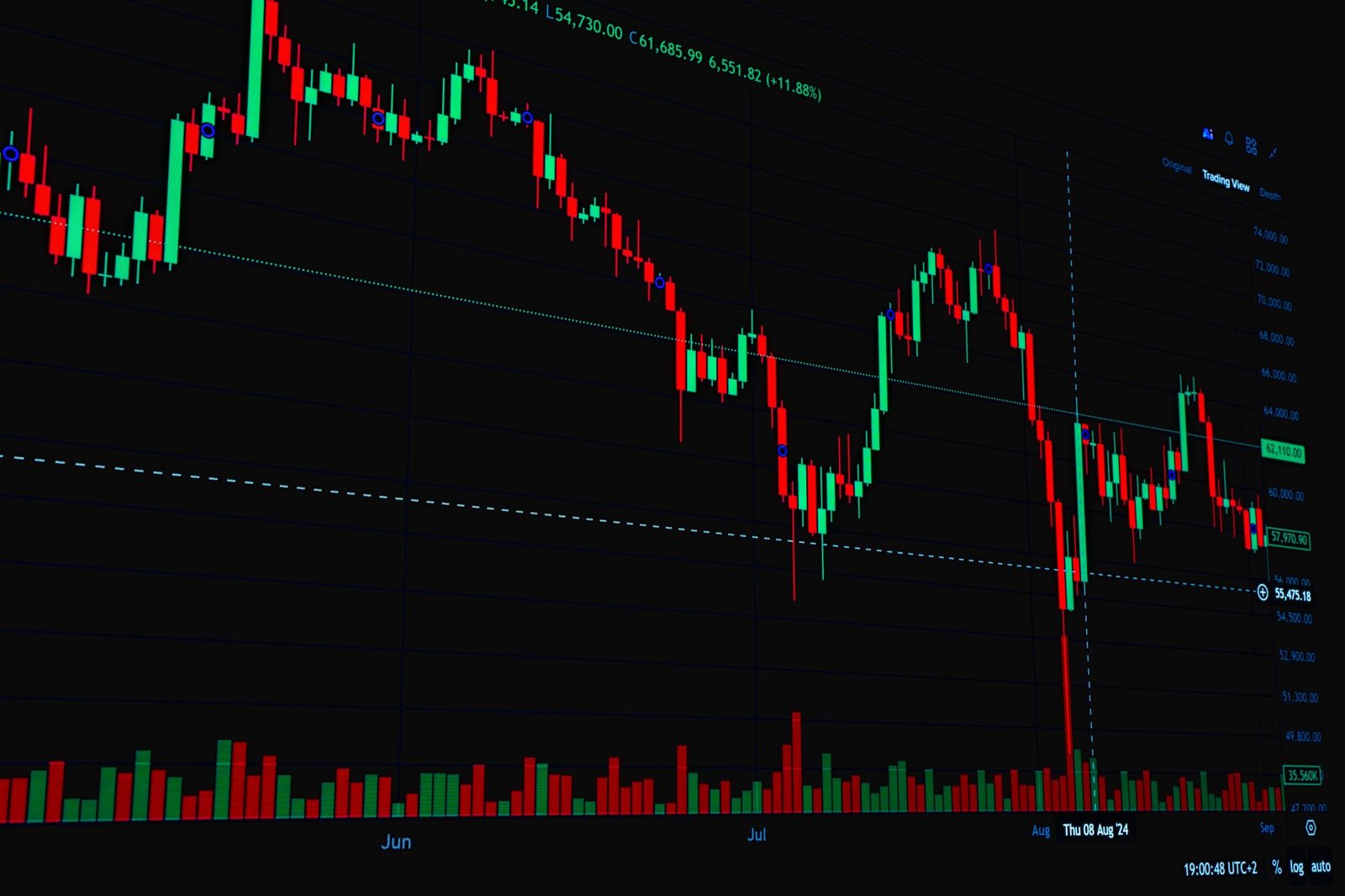
U.S. stocks ended a mixed week with the Dow Jones Industrial Average notching its third consecutive weekly loss, even as the broader S&P 500 and technology-heavy Nasdaq managed to close in positive territory.
The divide in U.S. equity markets widened this week, with the Dow Jones Industrial Average — a price-weighted index of 30 large American companies — slipping for the third week in a row. Meanwhile, the S&P 500 and Nasdaq Composite held up better, pointing to a market where investor appetite remains selective rather than broad.
The Dow’s continued weakness reflects pressure on some of its heavier industrial and financial components, which tend to be more sensitive to interest rate expectations and slowing economic momentum. When borrowing costs stay elevated, companies with large capital needs — like manufacturers and banks — often feel the squeeze first.
The Nasdaq’s relative strength tells a different story. Technology and growth-oriented stocks have been buoyed this year in part by enthusiasm around artificial intelligence and the expectation that the Federal Reserve’s rate cycle is nearing or past its peak. Lower future rates make the projected earnings of high-growth companies look more valuable in today’s dollars, which tends to support their share prices.
The S&P 500, which tracks 500 of the largest U.S. companies and is widely considered the most representative benchmark of the American stock market, splitting the difference. Its modest outperformance over the Dow suggests that larger-cap technology and communication stocks are doing enough heavy lifting to offset weakness elsewhere.
Investors are navigating a delicate moment. Inflation has cooled from its peaks but has not fully returned to the Fed’s 2% target, keeping policy uncertainty alive. At the same time, signs of a softening labor market and mixed corporate earnings have made traders cautious about committing heavily to economically sensitive sectors.
The split between the Dow and the broader indexes is a reminder that “the stock market” is not one thing. Different indexes weight their components differently, and during periods of uneven growth, they can move in opposite directions for extended stretches.
Next week, investors will be watching for fresh economic data and any signals from Fed officials that could shift the outlook for interest rates heading into year-end.