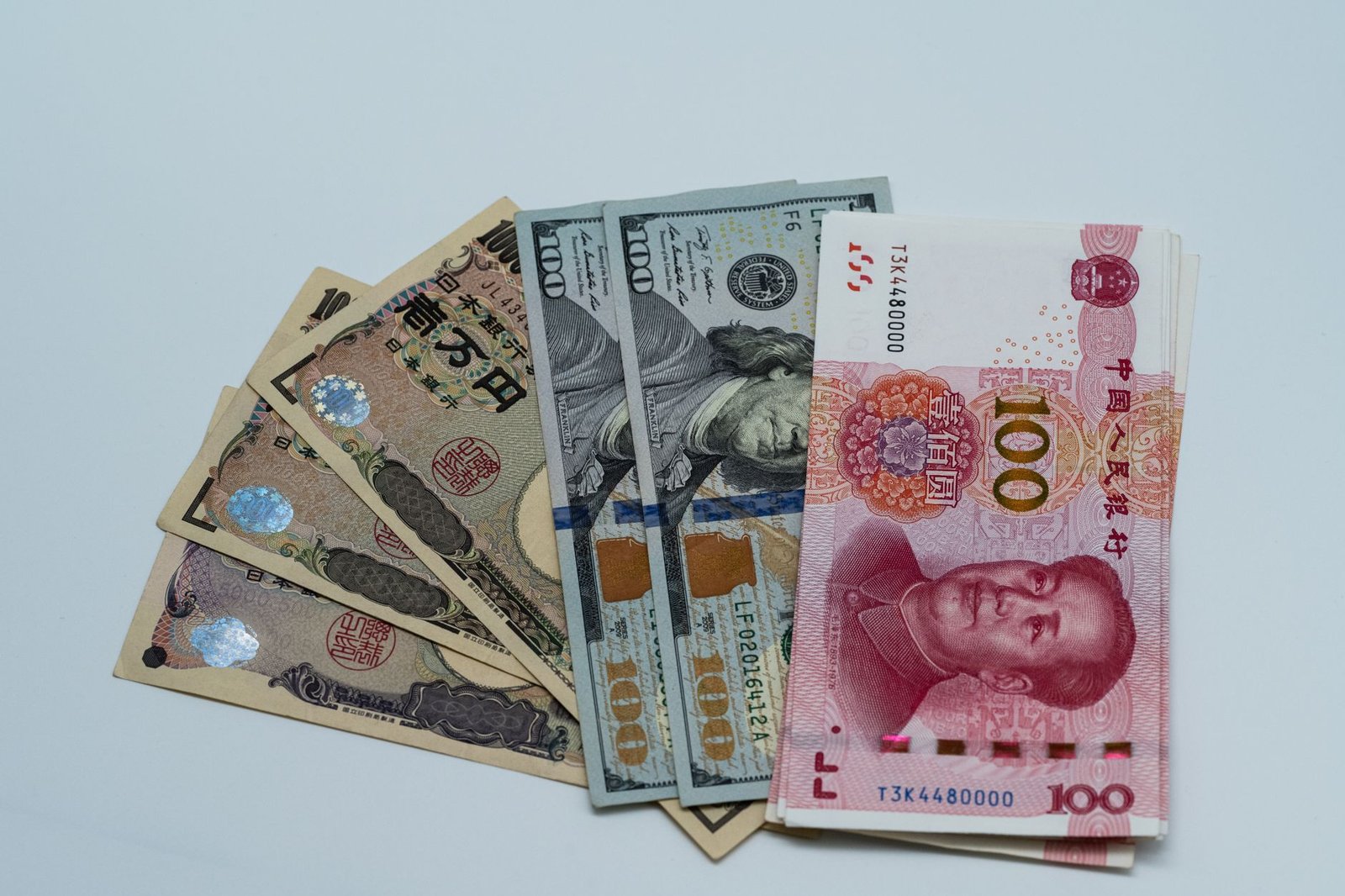
A rising Japanese yen is drawing fresh scrutiny to the so-called yen carry trade, a widely used strategy that borrows cheaply in Japan to invest in higher-yielding assets elsewhere. When the yen strengthens, those bets can quickly become costly to unwind.
The Japanese yen has been gaining ground in recent trading, and the move is raising questions about the durability of one of the most common strategies in global finance: the yen carry trade. In a carry trade, investors borrow money in a currency with low interest rates — in this case, Japanese yen — and invest those funds in assets that offer a higher return. Japan has kept interest rates near historic lows for years, making the yen a favored funding currency for this type of trade.
The strategy works well when the yen stays weak or stable. But when the yen rises in value, the cost of repaying that borrowed money goes up in the investor’s home currency, eating into profits. If the move is sharp enough, traders may rush to close their positions all at once, selling higher-yielding assets and buying back yen to cover their loans. That kind of rapid unwinding can ripple across global markets — touching currencies, stocks, and bonds in countries far beyond Japan.
Carry trade activity is notoriously difficult to measure directly, since much of it happens through derivatives and off-balance-sheet positions. But market analysts often track the yen’s moves as a rough proxy for carry trade stress. A sustained yen rally tends to coincide with bouts of volatility in emerging market currencies and risk-sensitive assets.
The broader backdrop matters here. Japan’s central bank, the Bank of Japan, has been gradually moving away from its ultra-loose monetary policy stance. Even modest signals of further rate increases in Tokyo can be enough to shift the calculus for carry traders, since the interest rate gap between Japan and other major economies is what makes the trade attractive in the first place. As that gap narrows, the trade becomes less profitable and more vulnerable.
It is worth noting that carry trade unwinds do not always turn disorderly. Sometimes the yen strengthens gradually, giving traders time to exit positions in an orderly way. A slow adjustment is far less disruptive than a sudden spike. Investors and analysts will be watching the pace of the yen’s move, and any statements from the Bank of Japan, closely in the sessions ahead.
The pace and persistence of the yen’s rise will be the key variable to watch — a slow drift is manageable, but a sharp move higher could test the nerves of traders with large carry positions.