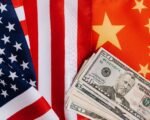
The world economy is navigating a rare combination of headwinds: an unresolved trade war, renewed conflict involving Iran, and a surge in government borrowing costs that is unsettling bond markets across multiple continents.
Global growth is being tested on three fronts at once. Tariff disputes between major economies continue to weigh on trade flows, Middle East tensions tied to Iran are adding a risk premium to oil prices, and government bond yields in several countries have climbed sharply — raising the cost of borrowing for households, businesses, and governments alike.
Trade wars impose costs that ripple outward. When large economies restrict each other’s goods, supply chains adjust slowly and painfully. Companies face higher input costs, consumers pay more, and the uncertainty itself tends to delay investment decisions. Over time, that drags on growth — not dramatically, but steadily.
Oil markets are particularly sensitive to events involving Iran, one of the world’s significant crude producers. Any threat to shipping lanes in the Persian Gulf or to Iranian output tends to push energy prices higher. Higher oil costs act like a tax on the global economy, squeezing consumers and lifting inflation at a time when many central banks are still trying to bring price growth under control.
The bond market pressures add another layer of complexity. When yields rise — meaning the price of existing bonds falls — borrowing becomes more expensive across the economy. Mortgage rates climb. Corporate debt costs increase. Governments running large deficits face higher interest bills. In a world where many nations are still carrying elevated debt loads from the pandemic era, a sustained rise in yields can become a meaningful fiscal constraint.
What makes the current environment particularly demanding for policymakers is the combination. Central banks that might otherwise cut interest rates to support growth are instead watching inflation risks tied to energy and trade. Fiscal authorities considering stimulus face markets that are already demanding higher yields to lend to governments. There is little easy room to maneuver.
Investors and analysts will be watching how long these pressures persist and whether any one of the three — trade policy, geopolitical conflict, or bond market stress — escalates further. For now, the global economy is holding, but the margin for error is narrowing.
How central banks and governments respond to this combination of shocks will shape the economic outlook for the rest of the year.