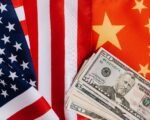
Member countries of the BRICS economic bloc are moving to conduct more trade among themselves in their own national currencies, a shift that reflects a growing desire to reduce dependence on the U.S. dollar in cross-border transactions.
Countries in the BRICS group — which includes Brazil, Russia, India, China, and South Africa, along with newer members — have been stepping up efforts to settle trade deals in local currencies rather than converting through the U.S. dollar. The push signals a deliberate, long-term strategy to build financial networks that bypass the traditional dollar-dominated system.
The dollar currently anchors the vast majority of global trade and financial transactions. When countries trade with one another, they typically convert their currencies into dollars to complete the exchange. This gives the United States significant economic and geopolitical leverage, which some BRICS members argue leaves them exposed to U.S. monetary policy swings and the threat of financial sanctions.
By using local currencies — for example, settling an oil transaction between Russia and India in rupees and rubles, or a Chinese goods deal in yuan — these countries aim to lower their currency conversion costs and insulate themselves from dollar fluctuations. It also reduces their need to hold large dollar reserves as a buffer.
The effort is not new, but momentum has grown steadily in recent years, particularly after Western nations imposed sweeping financial sanctions on Russia following its invasion of Ukraine. That episode demonstrated how quickly access to the dollar-based system could be cut off, prompting other BRICS members to take the idea of alternatives more seriously.
Progress, however, has been uneven. Building the infrastructure for local-currency trade — including payment systems, clearing mechanisms, and mutual trust between central banks — takes years. China’s yuan has made the most headway as an alternative settlement currency, but it remains a distant second to the dollar globally. Other BRICS currencies face even steeper hurdles, including limited convertibility and shallow financial markets.
For global markets, the longer-term implication is a gradual, rather than sudden, erosion of dollar dominance. Most analysts see a slow drift rather than a sharp break, given how deeply embedded the dollar is in commodity pricing, bond markets, and foreign exchange reserves worldwide.
Watch for signals from BRICS finance meetings on whether concrete payment infrastructure — not just political intent — is advancing.