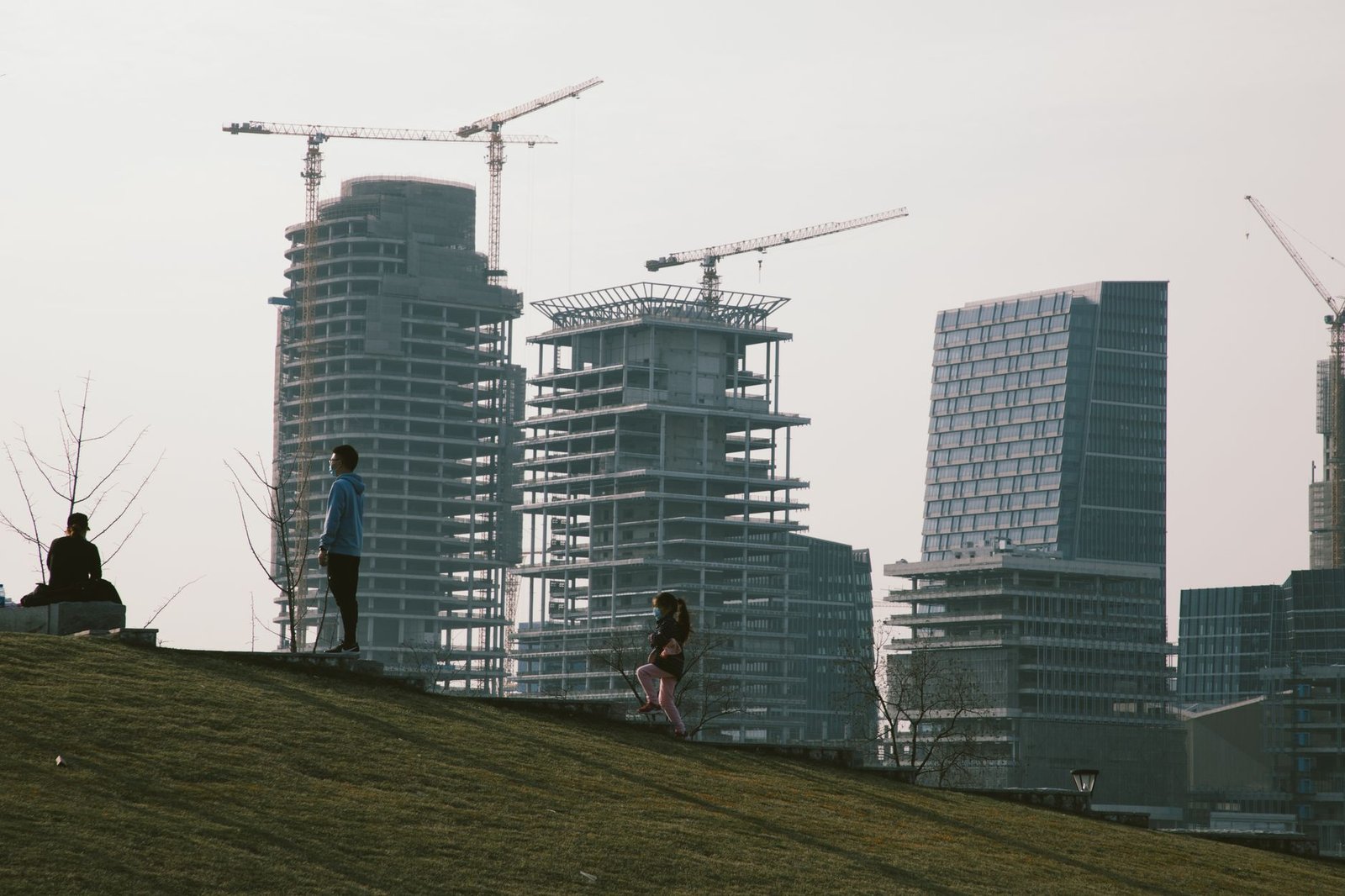
Home prices in China remain under persistent pressure, a sign that the country’s prolonged property downturn has yet to find a floor. The weakness adds fresh drag to an economy that policymakers have struggled to re-energize.
China’s property sector — once the engine of the country’s remarkable economic rise — continues to act as a brake on growth. The latest data show home prices holding near multi-year lows, with little sign of a durable recovery despite a series of government support measures introduced over the past two years.
Real estate and related industries account for a large share of China’s economic output. When house prices fall or stagnate, households feel poorer and tend to spend less. Developers pull back on construction, reducing demand for steel, cement, and other materials. Local governments, which rely heavily on land sales for revenue, face tighter budgets. All of these effects work together to slow overall growth.
Beijing has tried multiple levers to stabilize the market: cutting mortgage rates, easing purchase restrictions in major cities, and directing state-backed buyers to absorb unsold housing inventory. Progress has been uneven. Buyer confidence remains fragile, partly because some large developers are still working through debt restructurings that began several years ago.
The weakness in property also complicates China’s broader policy picture. Consumer prices have been soft, raising concern about deflationary pressure — a situation where falling prices discourage spending and investment, creating a self-reinforcing slowdown. The People’s Bank of China has kept monetary policy relatively loose, but rate cuts alone have so far not been enough to reignite the housing market.
For global markets, a sluggish Chinese economy has knock-on effects. China is a top consumer of commodities including copper, iron ore, and oil, so weaker growth there tends to soften prices for those raw materials worldwide. Emerging-market economies that export to China are also exposed to the slowdown.
Analysts say a genuine housing recovery likely requires a combination of sustained policy support, a rebuilding of household confidence, and time for excess inventory to be absorbed — none of which happens quickly.
Watch for China’s monthly activity data and any new stimulus announcements as the clearest early signals of whether the property drag is easing.