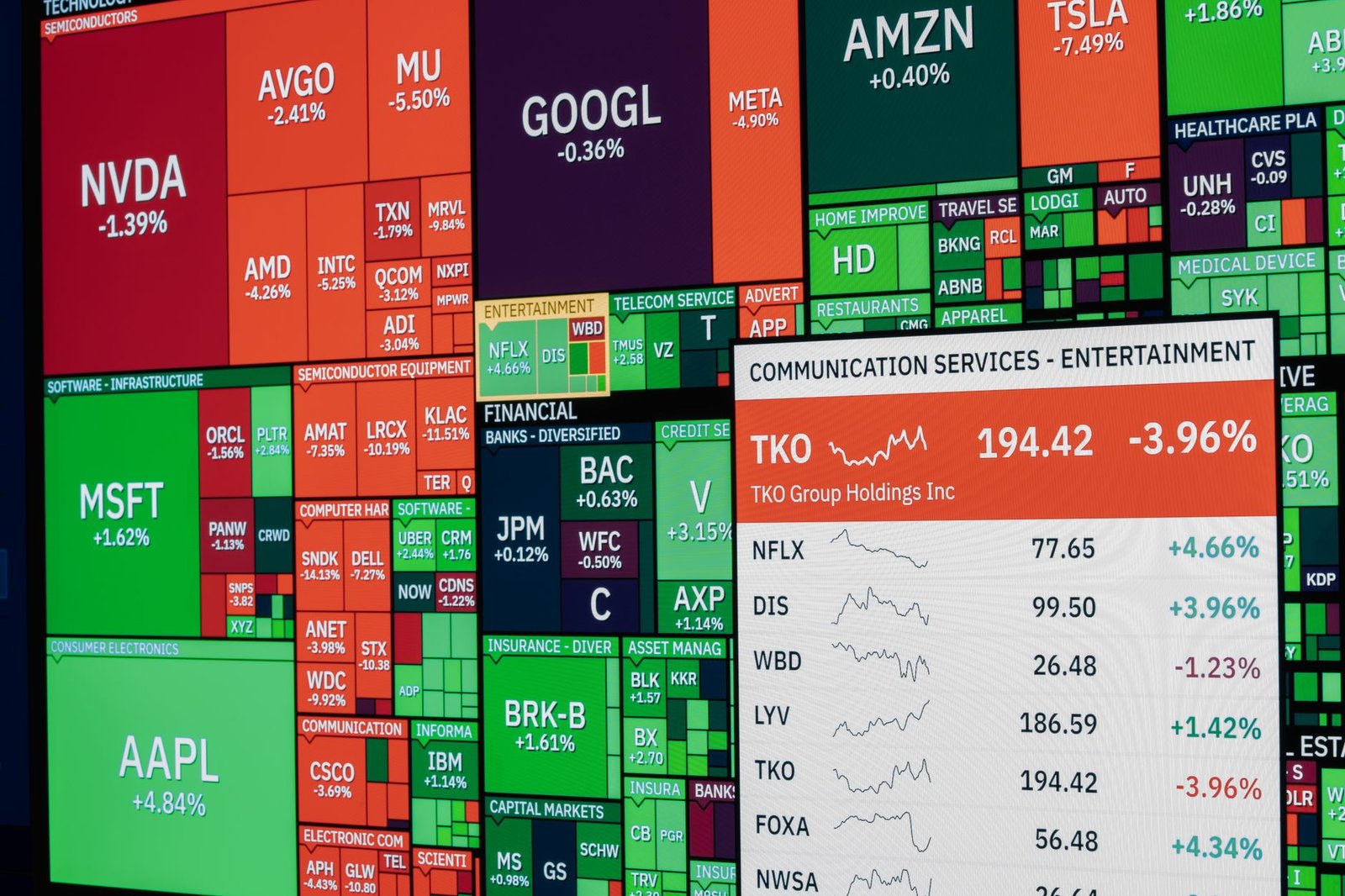
U.S. stock markets fell in recent trading as persistently high bond yields continued to pull investors away from equities. Rising yields raise borrowing costs and make stocks look less attractive compared with the steady income bonds can offer.
American stocks came under renewed pressure as Treasury yields held at elevated levels, renewing the familiar tug-of-war between fixed-income markets and equities. When bond yields climb — meaning investors demand more return to lend money to the government — the appeal of stocks tends to fade. Higher yields also signal tighter financial conditions across the broader economy.
The dynamic playing out now is one investors have watched closely over the past two years. The Federal Reserve’s extended campaign to bring inflation down pushed short-term interest rates sharply higher. Long-term Treasury yields followed, and they have remained stubbornly elevated even as the central bank has taken some steps to ease policy. That persistence in long yields reflects ongoing uncertainty about the inflation outlook and the size of the U.S. government’s borrowing needs.
High yields hit certain corners of the stock market harder than others. Companies that carry large amounts of debt see their financing costs rise, squeezing profit margins. Rate-sensitive sectors — such as real estate and utilities — tend to lose ground because their dividends become less competitive when safer bond income is readily available at higher rates.
Broader market sentiment has also been shaped by questions about how much further the Fed may need to go, or how long it will need to hold rates at current levels, before inflation is convincingly tamed. Each piece of economic data — jobs numbers, consumer prices, growth figures — is now scrutinized for clues about the policy path ahead.
For everyday investors, the environment serves as a reminder that stocks and bonds do not move in isolation. A bond market signaling caution about the economic outlook or government debt sustainability can translate quickly into volatility on equity trading floors.
Treasury yield levels and upcoming inflation data will remain the key signals to watch as markets try to find their footing.