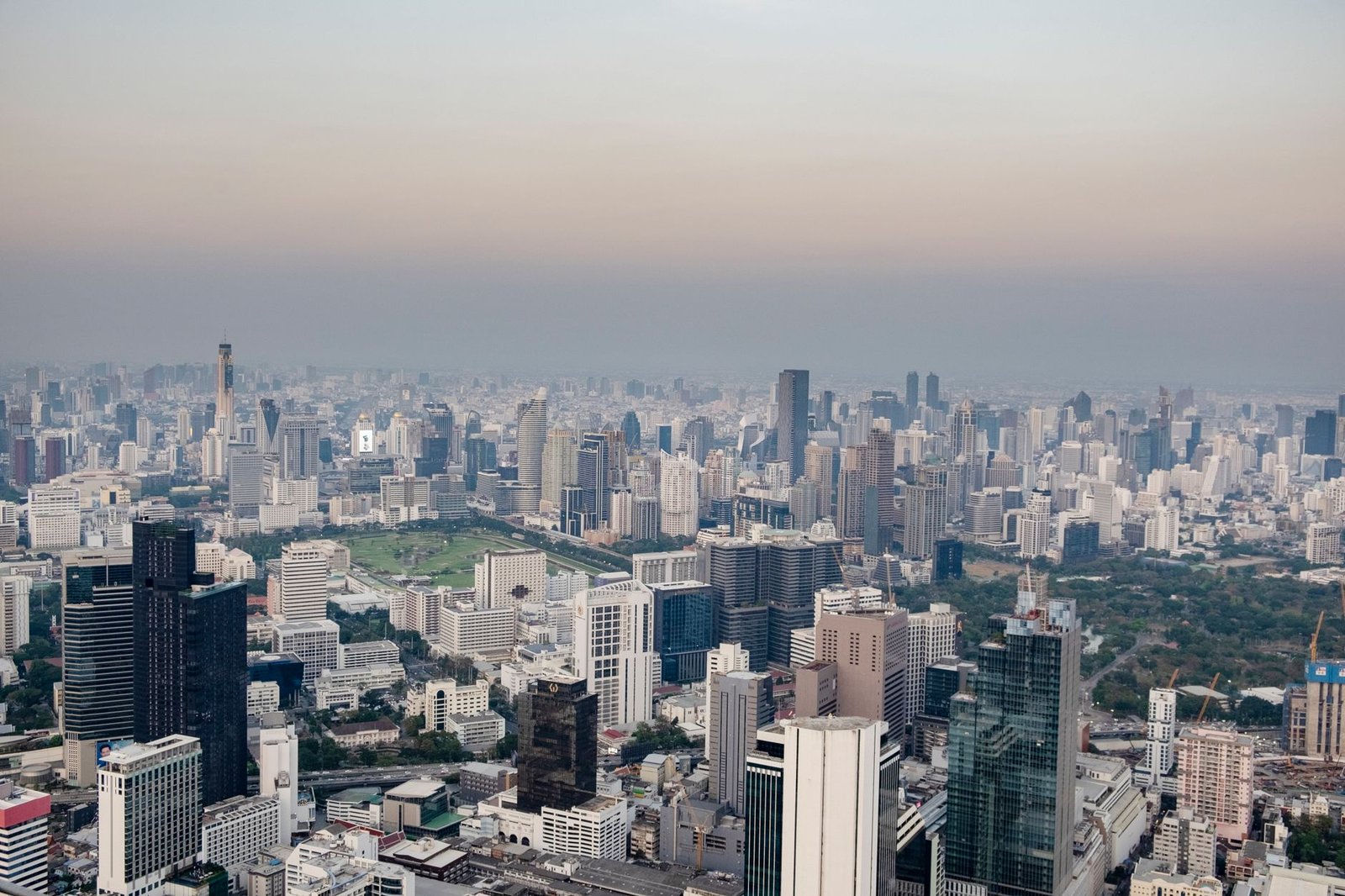
A new report from a major international development institution argues that how Thailand manages its cities will determine whether the country can break into the ranks of high-income economies. The findings put urban planning and infrastructure at the center of Thailand’s long-term growth strategy.
Thailand has spent decades working toward a significant economic milestone: graduating from middle-income to high-income status. A new analysis from a leading global development body suggests that the country’s cities hold the key — and that without deliberate investment in urban infrastructure, connectivity, and governance, that goal will remain out of reach.
The report focuses on what economists call the “middle-income trap” — a pattern where developing economies grow quickly at first but then stall before reaching the productivity levels of wealthier nations. Thailand has been navigating this challenge for years, and the report argues that dense, well-functioning cities are one of the most reliable routes through it.
The reasoning draws on broad development economics. Cities concentrate workers, businesses, and ideas in ways that raise productivity. When urban infrastructure — transport, housing, utilities, digital networks — works well, the benefits spread across an entire economy. When it does not, congestion, inequality, and inefficiency can hold growth back even as a country’s overall income rises.
For Thailand, the report points to gaps in how secondary cities beyond the Bangkok metropolitan area are connected to national and regional economic networks. Strengthening those links, the analysis suggests, could unlock growth in areas that have so far been left behind by the country’s development.
The findings land at a moment when Southeast Asia broadly is competing for manufacturing investment and supply-chain shifts driven partly by global trade tensions. Countries that can offer reliable urban infrastructure and a productive workforce stand to benefit most from those shifts. Thailand, which already has a significant manufacturing base, is positioning itself to capture more of that opportunity.
The report does not prescribe a single policy path, but its core message is clear: urban investment is not a luxury for a country at Thailand’s income level — it is a prerequisite for the next stage of growth.
Thailand’s urban development choices in the coming years are worth watching as a gauge of how serious the country is about reaching its high-income ambitions.