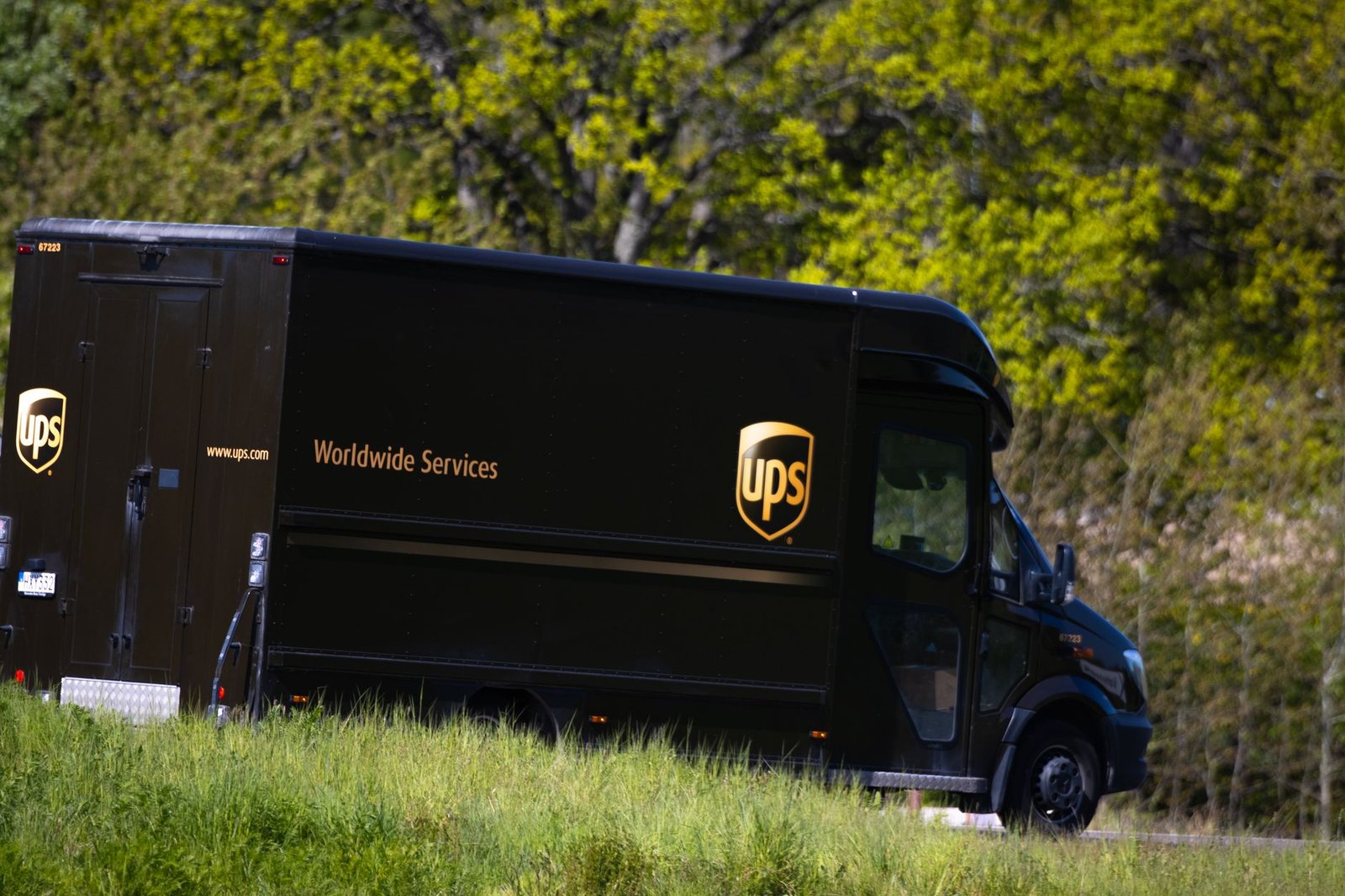
Shares of UPS came under pressure in recent trading after Wall Street began reassessing the company’s revenue outlook following reports that Amazon is scaling back its reliance on the shipping giant. The move highlights how dependent large carriers remain on a handful of major e-commerce customers.
UPS stock declined as investors digested the potential fallout from Amazon reducing the volume of packages it routes through the carrier. Amazon has been steadily building out its own logistics and delivery network for years, and any meaningful shift in that direction carries real financial consequences for UPS, which has counted the e-commerce leader among its largest customers.
The concern on Wall Street is straightforward: fewer Amazon packages means lower shipping volume, and lower volume puts pressure on both revenue and the fixed costs UPS must cover regardless of how many parcels it moves. Shipping networks are expensive to run, so losing a high-volume customer hits profitability more sharply than the raw revenue loss might suggest.
Not everyone is pessimistic, however. Some analysts who focus on the broader retail and consumer sector argue that the long-term demand picture for parcel delivery remains solid. E-commerce as a share of total retail spending has continued to grow, and that trend tends to support overall shipping volumes even as individual customer relationships shift. Retail-focused investors appear to be treating the Amazon news as a company-specific challenge for UPS rather than a warning sign for the industry as a whole.
The episode also draws attention to a broader strategic tension for large carriers. Building a deep partnership with a dominant customer like Amazon generates substantial volume in the short run, but it also creates concentration risk — the possibility that one client’s decision can move a company’s stock and reshape its business outlook. UPS and its peers have been trying to diversify their customer bases and lean more on higher-margin deliveries, such as healthcare shipments, to reduce that vulnerability.
For now, markets appear to be watching whether the Amazon pullback is a modest adjustment or the beginning of a more sustained shift in how the retailer handles its logistics.
How UPS manages its customer mix and cost structure in the quarters ahead will be the key number to watch.